Monday, 20 June 2011

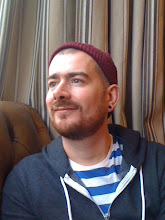
Announcing my candidacy for the Green Party Executive elections

After taking some time to discuss it with trusted friends within the Green Party, I have decided to stand for election in this year’s Green Party Executive (GPEX) elections. I am hoping to contest the Equalities and Diversity Co-ordinator role, which regular readers will realise is an area passionately close to my heart and a position where I think I have the professional skills to offer something new.

I’ve thought very carefully about what I might be able to achieve in the role. I believe that if we are to truly break through as a mainstream party, we need to broaden our appeal to all parts of society. This means building a party that is open, accessible and representative. It means giving voice to fresh perspectives and bringing them to the heart of our policy making. We need someone to make this role more visible than it has been recently, to argue the case (as I wrote earlier this month) for why equality and diversity remain important values for the Greens and seriously set about improving and measuring our performance in this area.

Once my nomination is formally accepted, I intend to use this blog to talk in detail about my policy plans for office and respond to any questions that members may have for me. I will make myself available by telephone, by email and in person, if local parties would like the opportunity to hear from me. I also intend to use the Members website to post my responses to questions there too. I’m hoping this election campaign will give me the chance to talk to many of the members whose ideas I want to draw into this work over the next two years. If you want to assist in my campaign, please drop me a line at (stephen_a_wood@yahoo.co.uk). I'd love to hear from you!


I really hope that those of you who are Green Party members will consider voting for me in the coming weeks. I want the opportunity to bring my constructive, forward-looking and inclusive outlook to the Executive, at a time when listening to the membership is as essential as ever for the future of this party. Watch this space for further news!

Saturday, 18 June 2011

Weathering UK political instability: Greens VS Lib Dems

Coalition politics have brought a pleasingly unpredictable edge to UK politics in the last year or so. For all the uncertainty political parties are negotiating, the new political playing-field is forcing all of us to re-examine our core values. We are having to respond to a rapidly evolving public mood and this means a useful questioning of political assumptions across a wide range of areas where bland consensus has reigned in recent years. None of the main parties are particularly managing this awkward transition well. This includes the Green Party too.

In spite of what appears to be widespread disapproval of the cuts agenda championed by the Coalition Government, nobody has yet been able to explain convincingly why the Conservative vote remains so solid, especially after an aggressively radical and uneven first year of office. Yet they flatline below the threshold at which they could try and rule alone. At most, David Cameron can probably retain the grudging respect of the public - but in my view, they have already concluded that they don't particularly like him.

The inability of Ed Miliband to set the electorate alight and draw a line under the excesses of the New Labour period means that he has regained only those voters now horrified with a Conservative-led government. Mainstream public opinion remains deaf to Labour, in spite a record in office which beyond the obvious failures around bank regulation, rising inequalities and Iraq, had some merits. In Miliband, I'm sensing a desperate need to place himself carefully in the centre ground on issues which is lending him an air of a Westminster politician, compared to the seemingly instinctual magpie-like political positioning of Blair.

Nick Clegg's reputation has nose-dived at twice the speed of his party's poll ratings. The compromises of power damage him more than any other because of how he played to the public yearning for a better, cleaner politics during the last election. Regardless of how he paints his modest successes, such as removing the worst of the NHS reform programme, his early behaviour in office couldn't conceal his obvious pleasure at being in power. His parliamentary colleagues (and to a much lesser extent, activist base) remain tarred with the same brush. Of all the three main parties, however, my gut tells me that they have the potential to drag their support back to 2010 levels. By the end of this term of office, he will have enough examples of how he curbed Tory excesses to earn some grudging recognition and the most visceral anger will have died down.

But where does this political instability leave the Green Party? I'll be honest - in spite of the historic victory of electing Caroline Lucas to Parliament and the establishment of a minority Green Council, we should be doing substantially better. Look at the statistics - we made only modest gains nationally and only substantially where we already had a record of success. Recently, I argued that widespread capacity-building at local authority level should be our prime focus now before investing heavily in another Parliamentary seat - and I'm more sure than ever that we should stay this course and invest widely in our smaller local parties.

From the perspective of the two main parties, the Lib Dems don't pose a threat right now. Here in Brighton, they are such a spent force that we don't consider them in our calculations that often. Nationally, we'd be wrong to dismiss them or the lessons their progress has for us. Two key elements of their history are worth remembering:

1. This week's impressive Green by-election victory in Rochford District Council has caught many commentator's eye due to the unseating of a substantial Conservative majority. The location of the seat has raised eyebrows in Green circles, but this success mirrors the strategy played by the Lib Dems over the last twenty years. This involves reflecting very clear national values and messages, but then explicitly targeting individual seats through engagement in solid local community activism. Our national profile will get us a hearing, but our commitment to local issues will be what converts hearts and minds.

2. The other lesson Lib Dems can teach us is that by exercising real power, we can now be seen to be achieving concretely on our policy aims and having a discernable effect on communities. Without doubt, this is a double-edged sword and those constituencies in this position have their work cut out in balancing new responsibilities with maintaining a growing local party, especially where electoral victory depletes the number of activists. The pressure is on for Brighton & Hove Council particularly to deliver on both counts and I'll be reporting back on our progress over the coming weeks.

The press and other parties may have written of the Liberal Democrats, but we cannot. We are fighting both them and Labour for centre-left voters, yet they have a party machine explicitly built around targeted community activism. We may have the advantage of not yet being tainted by proximity to power, but their organisation has a twenty year head start in the battle to convince voters that we truly speak for their villages, towns and cities.

Wednesday, 15 June 2011

Has the environmental movement lost touch?

In yesterday's Guardian, Charles Secrett, the former Director of Friends of the Earth (FOE) strongly criticised the work being done by some of more established environmental campaign organisations, arguing that they were spending money more on bureaucracy than on campaigners or activists.

Before going further, I should express an interest here. As well as helping run a local FOE group in Hackney & Tower Hamlets for nine years as a volunteer, I have also worked on a campaign team in Friends of the Earth's national office and taken an interest in a number of comparable organisations.

Whilst I understand the thrust of what Secrett is saying, I have to say that I disagree with his argument that environmental campaign organisations are overstaffed and wasting the resources that supporters invest with them. During my time at FOE, it was apparent that every person was an essential part of the machine, strengthening our ability to respond to events and capacity-build the activist base around the UK. In particular, those staff one step removed from policy and campaigns who worked with local groups to improve their ability to operate in the regions were excellent ambassadors for the organisation. The strength of those relationships went to the heart of what made the environmental movement work for me and seeing them at work was one of the most inspiring parts of my time in the field.

Where his arguments have more traction with me would be around the nature of whose voice is heard most in these organisations. As what seemed a necessary part of being taken more seriously during the New Labour years, a distinct professionalisation of the environmental movement did take place and this inevitably created a distance between many of those working full-time on environmental lobbying and the rank and file activists. I witnessed it rarely, but I can understand why some activists saw the national office as inaccessible or elitist.

Comparing this with my experience in the Green Party is stark - whilst I will continue to argue that we need to become a more professional and structurally coherent organisation, I will always argue that that sense of equality amongst us, from ordinary member to GPEX co-ordinator, remains inbedded in the fabric of this political party. For all the difficulties of running a national organisation on a shoestring, we are still retaining these core values.


My response to the crisis of legitimacy facing environmental organisations is to look at the successes of recent activism such as UK Uncut - based around self-organisation, viral use of social media sites and bottom up decision-making. Less time should be concerned with design and glossy packaging and more in considering how to make issues more relevant to the broader population, not just the concerned middle classes. Unsurprisingly, the latter demographic now dominates the positions of power in environmental campaign organisations. Environmental campaigns need to bring forward local, regional, and southern voices to the policy making table, both through greater prominence of volunteer activists and in a radically improved recruitment strategy if they are to continue speaking for us on the coming climate crisis.

Sunday, 12 June 2011

Big Brother is watching: scrutinising our elected representatives

At the risk of looking like an incredible political geek, I wanted to share something that I have found particularly fascinating in the last few weeks: the webcasting of Brighton & Hove Council meetings. Who am I kidding? Regular readers already know I'm beyond keen in using technology to open up politics!

Since December of last year, key council meetings, such as cabinet, planning and scrutiny meetings have been streamed on a live basis and are then available as an archive. Agendas, the contributions of individual speakers and associated documentation are also searchable. At a stroke, this move flips the relationship between electing and elected - no longer are we placed in the position of passively asking for information from the powerful and informed. In this new world, voters have it at their disposal if they choose to find it.

This shift has the potential to revolutionise our ability to hold elected representatives to account. A consistent voter frustration with Council meetings has been that they generally need to be held during core working hours, limiting the ability of most voters to attend. This change crucially brings Council business further into the lives of those individuals with limited mobility.

Whilst the new system is not exhaustive in coverage of all meetings, I am impressed with the steps taken by the previous Conservative Council to truly open themselves up to the public eye. Knowing how strongly my Green Councillor colleagues feel about increasing transparency in public life, I am eager to see how they will build upon this strong foundation in their term in office. Publicising this service more broadly would be an excellent first step.

More than before, now that my local party holds the balance of power on the Council, I'm finding this invaluable in informing me about the major local decisions my colleagues are wrestling with. Additionally, it provides a unique insight and opportunity to scrutinise the priorities and performance of our elected representatives away from the glare of election campaigns.

A single month into our new Council, I'll keep my opinions to myself regarding individual performances, but these webcasts are fundamentally shaping my views about the politicians in the city, both external to and within my own party. I would encourage you to check if your Council is doing something similar. If not, I can't recommend this highly enough, especially for those interested in standing for public office, shaping local political policy or keen to hold politicians accountable. Believe me, it's an eye opener!